
Every takeout order you send out has a second life in somebody's microwave. Choosing microwave safe takeout containers is what decides whether that second life goes well — or whether the customer opens the door to a warped lid, a puddle of butter chicken and a box that has visibly slumped. It is also one of the easiest specs to get wrong, because most of the packaging sitting on a shelf in a Moncton or Halifax kitchen looks broadly the same until it gets hot.
Here is what actually happens to each material, how to read the marks stamped into the bottom of a container, and what to keep in stock if reheating is a routine part of your business.
Why this question matters more than it used to
Two things changed. Delivery volume stayed high after the pandemic years, which means far more of your food is eaten later rather than at the table. And the foam phase-out pushed a lot of operators into unfamiliar materials in a hurry — fibre, PET, coated paperboard — without anyone stopping to check the heat rating on the case.
The result is a lot of guessing. For restaurants and takeout kitchens the cost of guessing wrong is not just a ruined container; it is a customer who blames the food for something the packaging did.
How to read the bottom of a takeout container
Flip the container over. There are two marks worth looking for, and they mean different things.
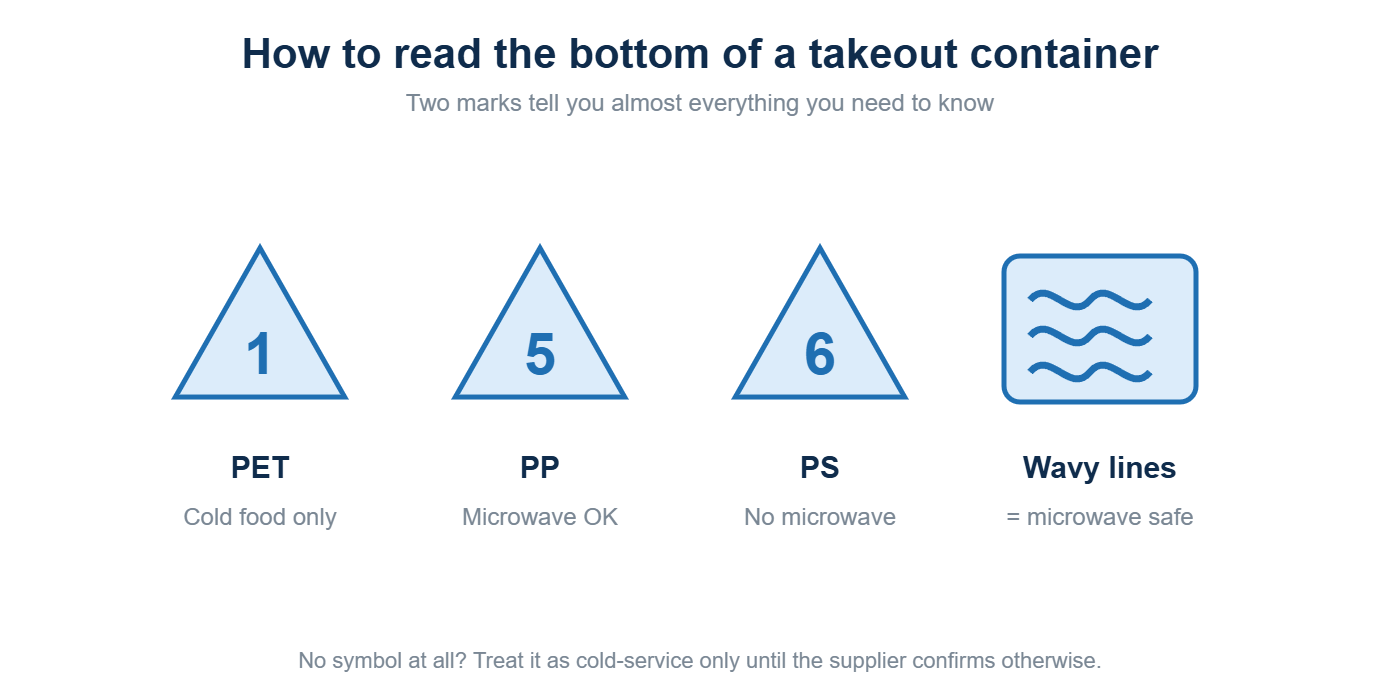
The triangle with a number is the resin identification code. It tells you which plastic you are holding: 1 is PET, 5 is PP, 6 is polystyrene. It is a recycling mark, not a safety mark, but for takeout packaging it is a very good shortcut — if it says 5, you are almost certainly holding the reheat-friendly option.
The separate symbol showing a dish with wavy lines above it is the manufacturer's microwave rating. That is the one that actually counts. If a container carries no mark at all, treat it as cold-service only until your supplier confirms otherwise in writing.
Are all plastic takeout containers microwave safe?
No — and this is the single most common mistake we see. Three plastics turn up constantly in foodservice and they behave completely differently.
- PP (polypropylene, code 5). The workhorse. Rigid, opaque or translucent, holds its shape with hot food and reheats without complaint. This is what "microwavable container" almost always means.
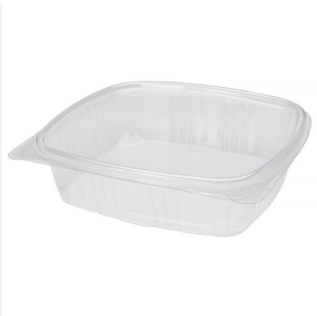
- PET (code 1). The clear, glossy, crisp-sounding one used for hinged salad boxes and cold cups. PET starts to soften well below boiling point. It is a cold-service material, full stop.
- Foam / polystyrene (code 6). Fine for holding hot food briefly, but it should never go in a microwave. Where foam is still in use, the reheat instruction has to be "transfer to a plate."
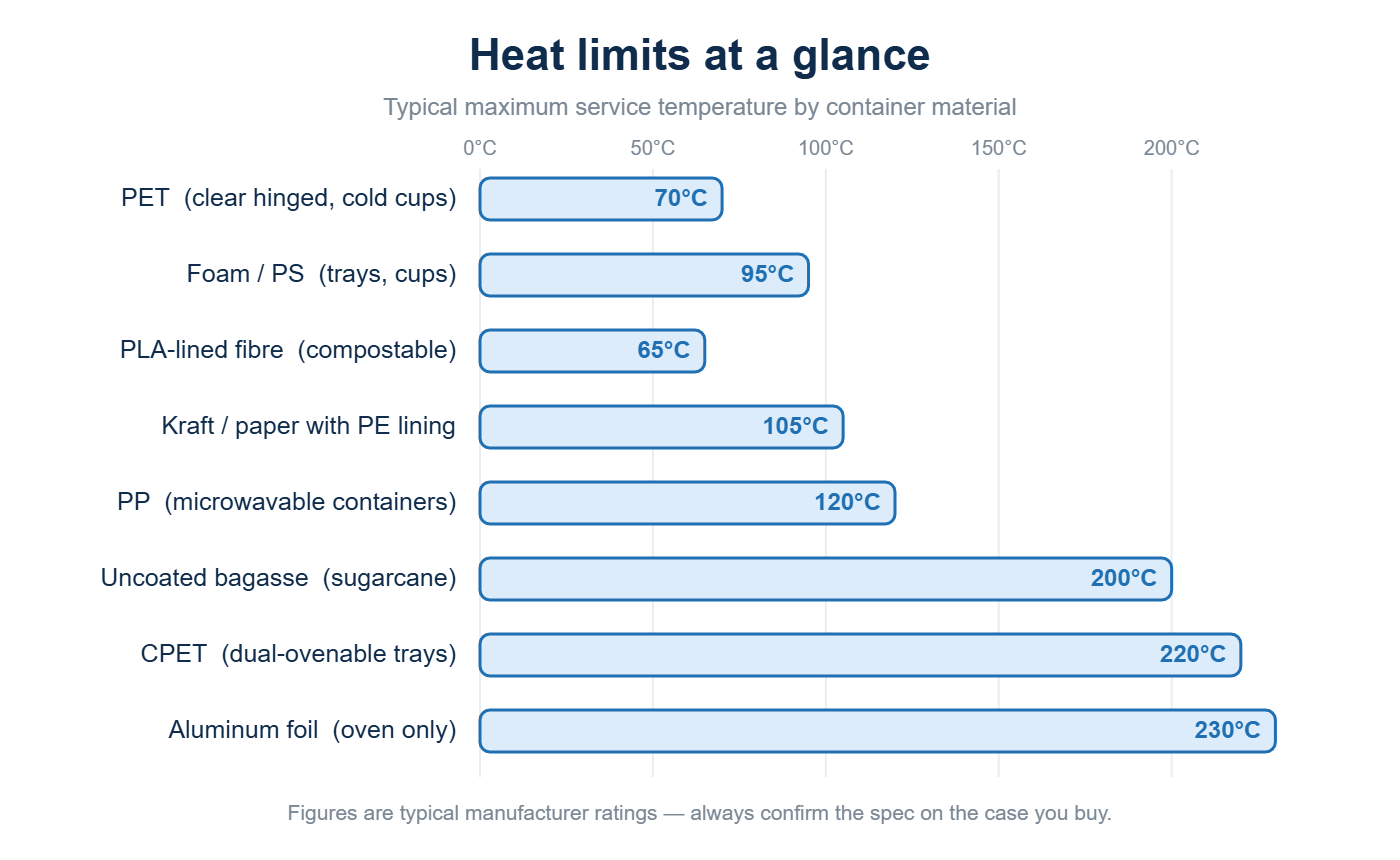
Heat limits at a glance
Rough working numbers, based on typical manufacturer ratings. Always confirm against the spec sheet for the case you actually buy, because grades vary.
| Material | Microwave | Oven | Freezer | Best for |
|---|---|---|---|---|
| PP (code 5) | Yes | No | Yes | Hot mains, curries, soups |
| PET (code 1) | No | No | Short term | Salads, cold deli, desserts |
| Foam / PS (code 6) | No | No | Yes | Short-hold hot food, cold trays |
| CPET | Yes | Yes | Yes | Oven-finished ready meals |
| Bagasse, uncoated | Short reheats | No | Yes | Hot mains, compostables |
| PLA-lined fibre | No | No | Yes | Cold service only |
| Kraft with PE lining | Short bursts | No | Yes | Hot food held briefly |
| Aluminum foil | No | Yes | Yes | Oven dishes, catering trays |
Where bagasse and fibre containers fit
Uncoated sugarcane bagasse is the quiet winner here. It handles a two or three minute reheat without softening, it does not sweat the way plastic can, and it goes into an organics stream at the end. It is a genuinely practical swap for hot mains.
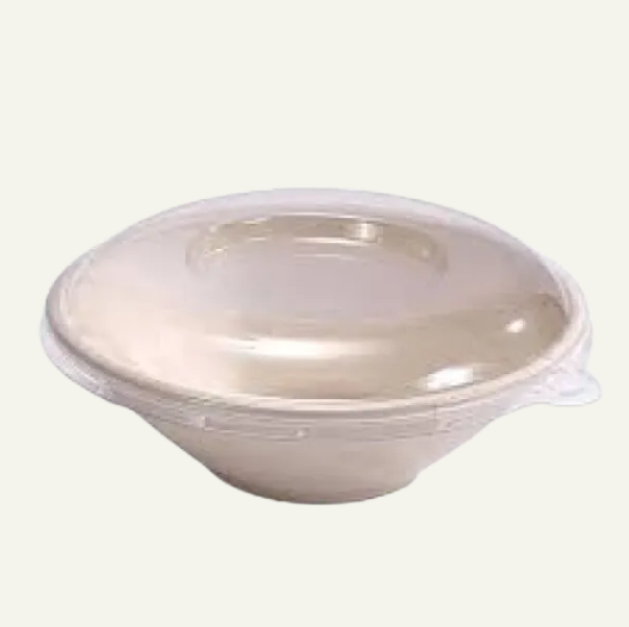
Two cautions. First, a PLA lining changes everything: PLA softens far earlier than the fibre around it, so lined compostables are cold-service unless the maker says otherwise. Second, bagasse is not an oven material — a conventional or toaster oven will scorch it. If you are weighing up the fibre options, our guide to sugarcane bagasse containers goes through sizes and lid fit in more detail, and you can see the full range of sugarcane and bagasse containers in the shop.
Foil containers: excellent in the oven, never in the microwave
Foil is the mirror image of PP. It handles oven temperatures happily, which is why it dominates catering trays and anything meant to be finished with heat — but metal in a domestic microwave means arcing and a possible fire. Print the reheat instruction on the label and let the customer know.
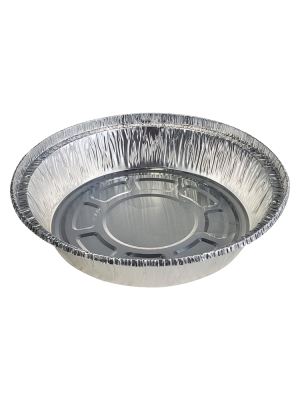
If most of your reheating happens in an oven rather than a microwave, foil containers are usually the cheaper and sturdier answer anyway.
What to stock if reheating is part of your business
For most kitchens the simplest setup is a single PP family in three or four sizes, plus a fibre option for anyone running a compostable program.
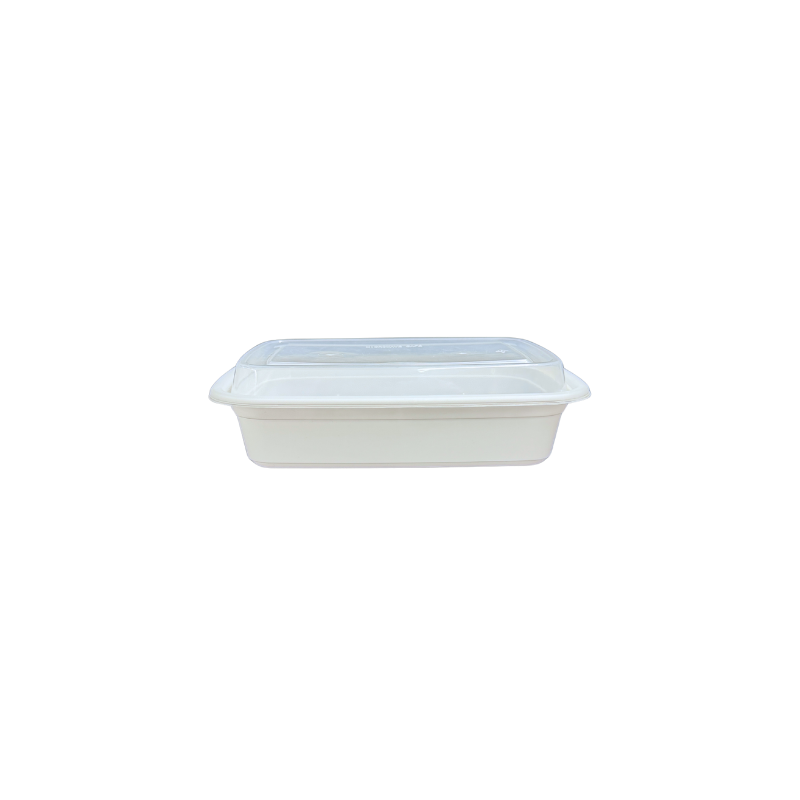
Three practical notes. Lids are often a different plastic from the base, so a PP tub with a PET dome lid is only microwave safe once the lid comes off. Loosen or remove the lid before reheating either way, or steam pressure will pop it. And high-fat, high-sugar sauces run much hotter than the food around them, so a container rated to 120°C can still deform under a very oily curry.
Our microwavable PP containers run from 16 oz through 58 oz, including two and three compartment layouts. If you need the vented, foam-free clamshell format instead, the MFPP clamshell guide covers where those work best.
Buying microwave safe takeout containers in Atlantic Canada
Spec sheets are useful, but nothing beats holding the container. If you are in New Brunswick or Nova Scotia, come and squeeze a few at our Moncton cash-and-carry on Halifax Street — take a case home, run your busiest dish through a microwave, and see how it holds up before you commit to a pallet.
We deliver across New Brunswick, Nova Scotia, PEI and Newfoundland, and wholesale pricing applies whether you order online or pick up in person.