
Poly t-shirt bags are the thin plastic carry bags with two loop handles that stores have handed across the counter for decades. They are cheap, they stack flat, and for years they were the default way to send an order out the door. But the rules in Canada have changed, and plenty of owners across Atlantic Canada are no longer sure what they are allowed to buy or what they can legally hand a customer. This guide breaks down poly t-shirt bag sizes, explains what the barrel fractions mean, and shows exactly where these bags still fit in your business in 2026.
What is a poly t-shirt bag?
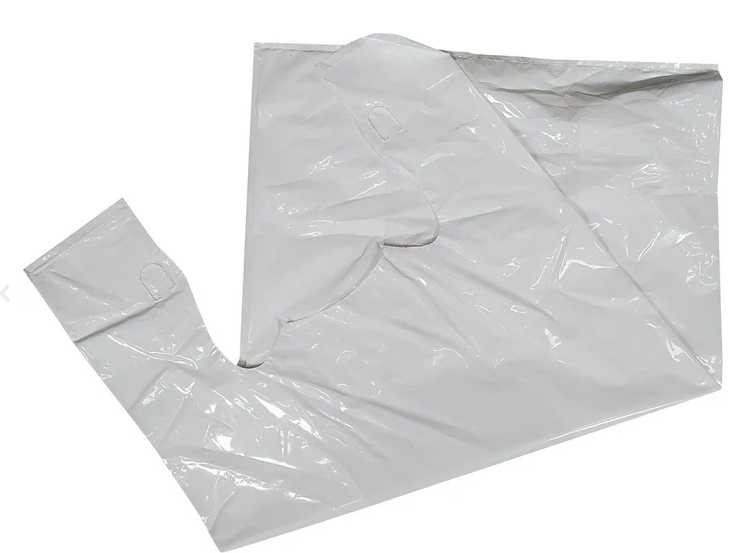
The name comes from the shape. Lay one flat and the two side handles look like the sleeves of a t-shirt, with the bag body as the torso. They are made from HDPE (high-density polyethylene) film, which is why they feel crinkly yet strong for their weight. Sizing follows an old "barrel" system, so the numbers on your supplier list — 1/6, 1/8, 1/10 — tell you how big the bag is before you ever open the case.
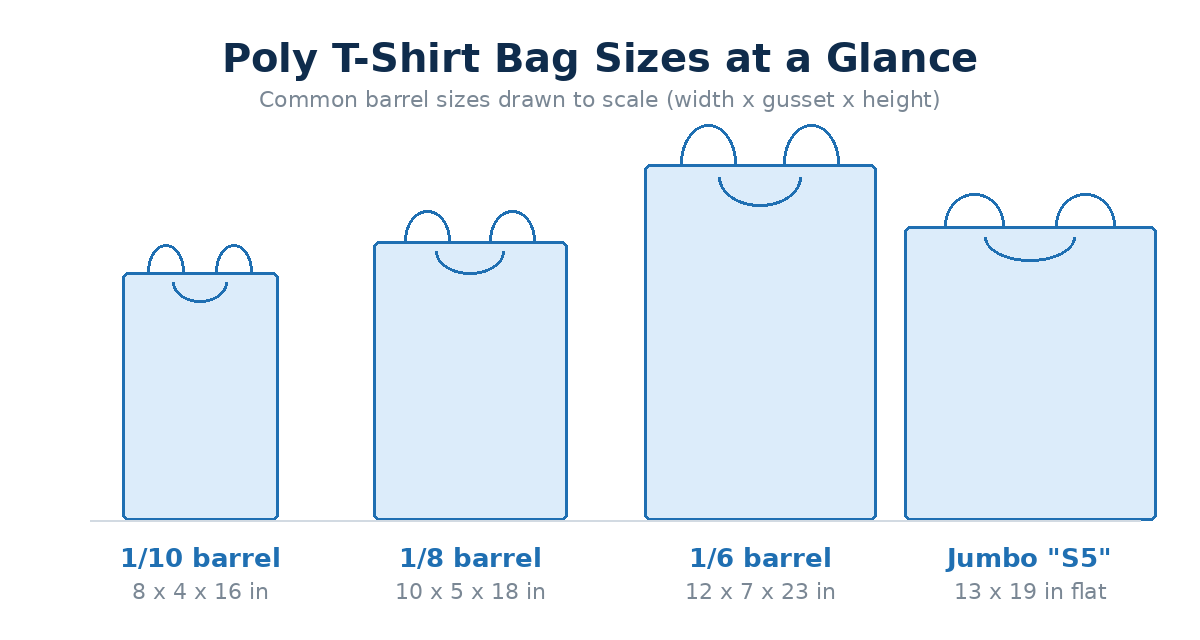
Here are the four sizes most food and retail businesses reach for, from the small 1/10 up to the jumbo rolls we keep for bigger orders.
| Size | Dimensions (W x gusset x H) | Typical thickness | Best for |
|---|---|---|---|
| 1/10 barrel | 8 x 4 x 16 in | ~12–16 microns | Small retail, bakery and pharmacy items |
| 1/8 barrel | 10 x 5 x 18 in | ~13–18 microns | Convenience, deli and takeout add-ons |
| 1/6 barrel | 12 x 7 x 23 in | ~15–22 microns | Grocery orders and heavier loads |
| Jumbo roll | 13 x 19 in (flat) | ~18–30 microns | Bulk, large produce and back-of-house |
What do 1/6, 1/8 and 1/10 mean?
The fraction is a throwback to how bags were once counted against a "barrel" of material — the smaller the fraction, the bigger the bag. A 1/6 bag is larger than a 1/8, which is larger than a 1/10. It is not a figure you can convert straight to inches, so always read the width, gusset (the side fold that gives the bag depth) and height printed on the case. Thickness matters just as much: it is measured in microns, where 25 microns equals one mil. Below about 11 microns a bag tears too easily, so match the gauge to the weight you are carrying.
Are plastic t-shirt bags banned in Canada?
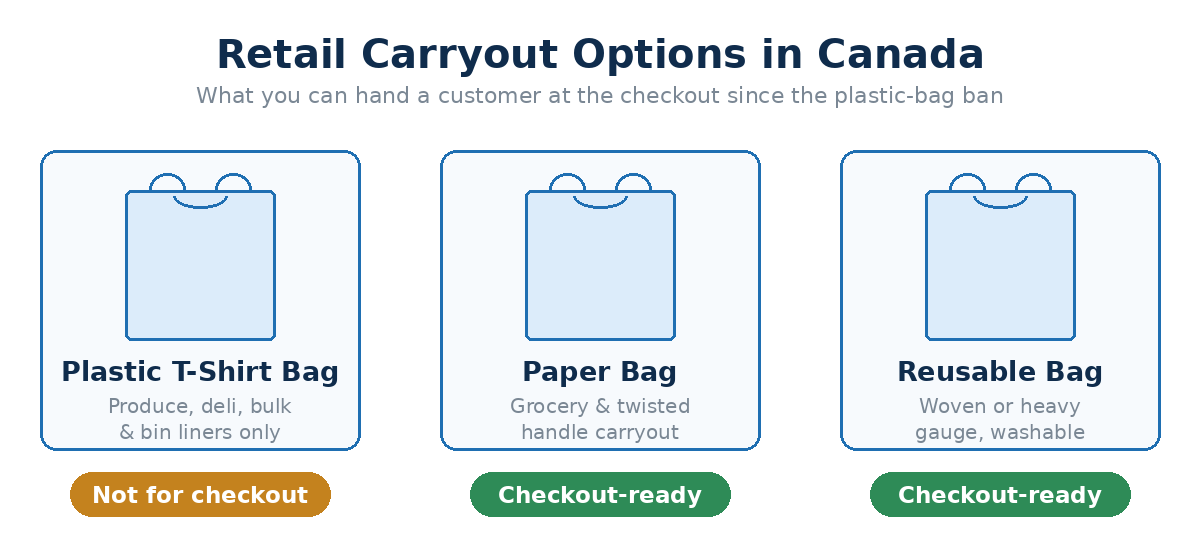
For use as a checkout bag, yes. Canada's Single-use Plastics Prohibition Regulations ban the manufacture, import and sale of plastic checkout bags — the bags a business hands over at the till to carry purchased goods. The sale prohibition took full effect on December 20, 2023, and on January 30, 2026 the Federal Court of Appeal upheld the regulations, so they remain in force. That is the short answer most operators are searching for.
Atlantic Canada got there even earlier. Prince Edward Island banned plastic checkout bags on July 1, 2019, Newfoundland and Labrador on October 1, 2020, and Nova Scotia on October 30, 2020. New Brunswick never passed its own province-wide ban, so the federal rule is what applies in Moncton, Saint John and Fredericton today. If you run a storefront anywhere in the region, plastic bags at the register are off the table.
Which poly bag uses are still legal?
Here is the part that trips people up: the ban is on checkout bags, not on every plastic bag. Poly t-shirt bags are still widely used and sold for jobs that are not point-of-sale carryout — bagging loose produce, holding deli and bakery items, lining bins and general back-of-house handling. If that is what you need, our poly t-shirt bags cover those uses in white and colour, from small sizes up to jumbo rolls. The rule to remember: use them behind the counter or for loose goods, not as the bag a customer carries a paid order out in.
What to hand customers at checkout instead
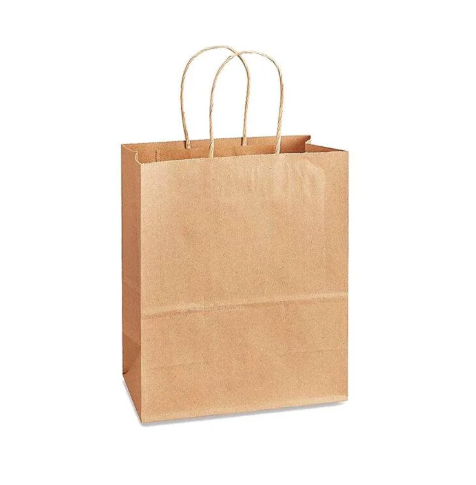
For carryout at the till, two compliant options do the job. Paper is the everyday workhorse: our twisted-handle paper bags look sharp for takeout and boutique retail, while flat-bottom paper grocery bags handle heavier grocery and produce orders. Both are checkout-ready and stack neatly on a counter. For customers who want something that lasts, reusable woven or heavy-gauge bags are the other legal route — just know that a plastic reusable has to survive carrying 10 kg over 100 trips (and a wash) to count as reusable under the federal rule, so flimsy thick bags do not qualify.
If you are working out which paper sizes map to your old plastic ones, our paper takeout bag sizing guide walks through it. And if you are re-checking cutlery at the same time, the same single-use plastics rules that reshaped the cutlery shelf are worth a read.
How to order the right bags for your business
Start with the heaviest thing the bag has to carry and size up from there — a 1/6 for grocery loads, a 1/8 for lighter takeout add-ons, a 1/10 for small counter items. Buy the gauge that matches the weight; a few extra microns cost pennies and save you the sidewalk disaster of a blown-out bottom. Order by the case so you are not reordering every week, and keep one paper carryout size and one poly produce size on hand so you are covered both at the register and behind it. Convenience stores and grocers across the region lean on exactly this two-bag setup.
Not sure which sizes fit your counter? Swing by our cash-and-carry counter in Moncton at 61 Halifax Street, or browse the full range online. We stock for restaurants, cafes, convenience stores and grocers across New Brunswick, Nova Scotia, PEI and Newfoundland, and we are always happy to help you match the right bag to the right job.