
Straws are one of the cheapest things you order and one of the easiest to get wrong. Grab the wrong diameter and your bubble tea pearls jam halfway up. Grab the wrong material and you are either serving a soggy paper tube or breaking federal law. If you buy restaurant straws for a cafe, pizzeria, juice bar or catering operation in Atlantic Canada, this is the plain-English guide to what you can legally sell, what size fits which drink, and how to stock without over-ordering.
What straws can Canadian restaurants use in 2026?
The short version: no single-use plastic straws. Canada's Single-Use Plastics Prohibition Regulations ban the manufacture, import and sale of single-use plastic straws, and that ban is not going anywhere. In November 2023 a Federal Court decision cast doubt on the rules, but on January 30, 2026 the Federal Court of Appeal overturned that decision and upheld the government's authority. The prohibition stands.
One detail trips up a lot of operators: the ban covers plastic straws made from "compostable," "biodegradable" or "biobased" plastics too. That includes PLA straws, the clear ones that look and feel like plastic. If it behaves like a plastic straw, the regulation treats it like one. So swapping conventional plastic for PLA is not a legal workaround.
What you can buy and hand out freely: paper straws and agave-fibre straws. For dine-in service, reusable metal, silicone or glass straws are also fair game. Those are the materials that keep you compliant.
The one exception: flexible straws for accessibility
There is a narrow carve-out. Single-use plastic flexible (bendable) straws stay available for people who need them for medical or accessibility reasons. Retail stores may sell them in packages of 20 or more, but only to a customer who asks, and the packages cannot sit on public display. They can also be kept on hand in settings like hospitals and long-term care homes.
For a typical restaurant or cafe this exception is not a loophole for everyday service. It exists so a guest who relies on a bendy straw can still get one. Keep a small box behind the counter for that purpose and serve non-plastic straws to everyone else.
Straw sizes explained
Diameter is what actually matters at the counter, because it decides what can travel up the straw. Here is the quick reference most operators need.
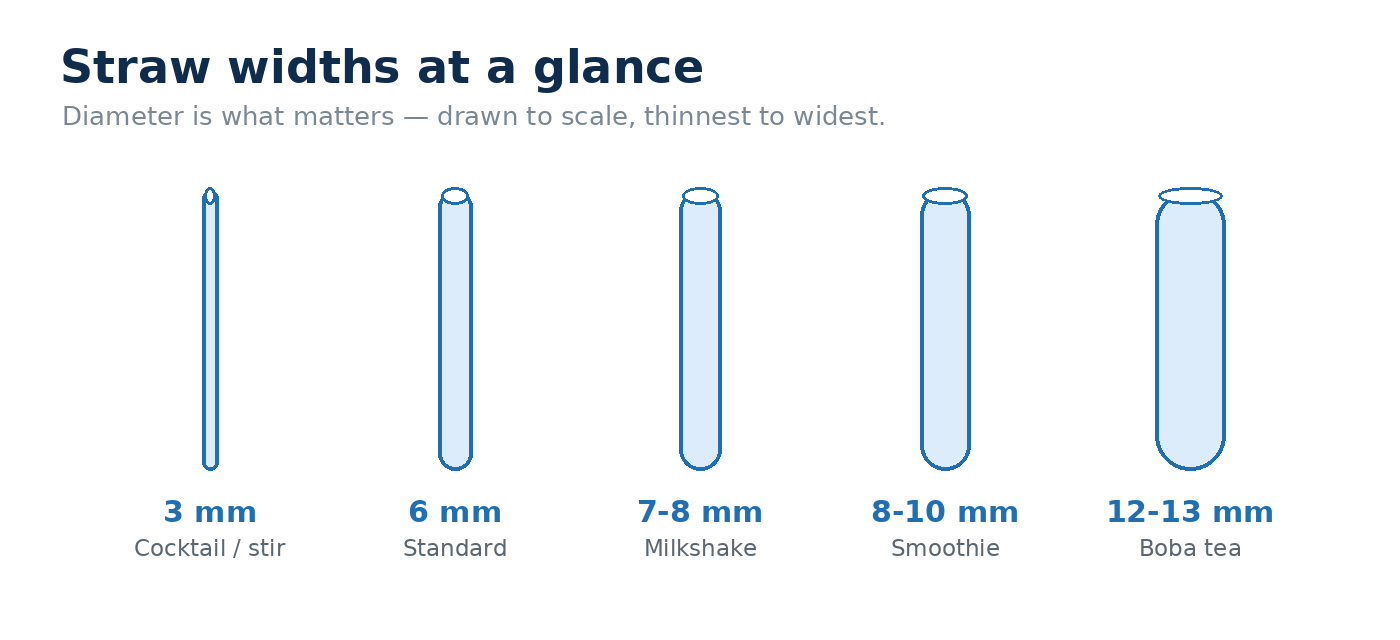
- Cocktail or stir straw, about 3 mm across, for espresso, cocktails and stirring.
- Standard or regular straw, about 6 mm, the everyday size for water, pop, juice and iced coffee.
- Milkshake or jumbo straw, about 7 to 8 mm, wide enough for milkshakes, slushies and frappes.
- Smoothie straw, about 8 to 10 mm, for smoothies and thick frozen drinks.
- Boba or bubble tea straw, the widest at about 12 to 13 mm, made to pass tapioca pearls and jelly.
| Straw type | Diameter | Typical length | Best for |
|---|---|---|---|
| Cocktail / stir | ~3 mm | ~5 in | Espresso, cocktails, stirring |
| Standard / regular | ~6 mm | 7.75-8 in | Water, pop, juice, iced coffee |
| Milkshake / jumbo | 7-8 mm | 7.75-8 in | Milkshakes, slushies, frappes |
| Smoothie | 8-10 mm | 8 in | Smoothies, thick frozen drinks |
| Boba / bubble tea | 12-13 mm | 8-9 in | Bubble tea with pearls or jelly |
Length matters less but still counts. Standard straws run about 7.75 to 8 inches, which suits most cold cups. Bubble tea straws are usually 8 to 9 inches so they clear a tall, pearl-filled cup, while cocktail straws are short at around 5 inches. A straw that sits too low leaves customers fishing for it; too tall and it tips the cup.
What size straw do I need for milkshakes and bubble tea?
For milkshakes, go wider than a regular straw. A standard 6 mm straw fights you when the shake is thick, so a 7 to 8 mm jumbo or an 8 to 10 mm smoothie straw pulls a proper milkshake without collapsing. If your shakes are extra thick or loaded with add-ins, size up again.
For bubble tea, use a dedicated boba straw at roughly 12 to 13 mm. Anything narrower and the tapioca pearls clog it, which frustrates customers and slows your line. The wider bore is the whole point. If you run both a smoothie and a boba program, stock two sizes rather than trying to make one straw do both jobs.
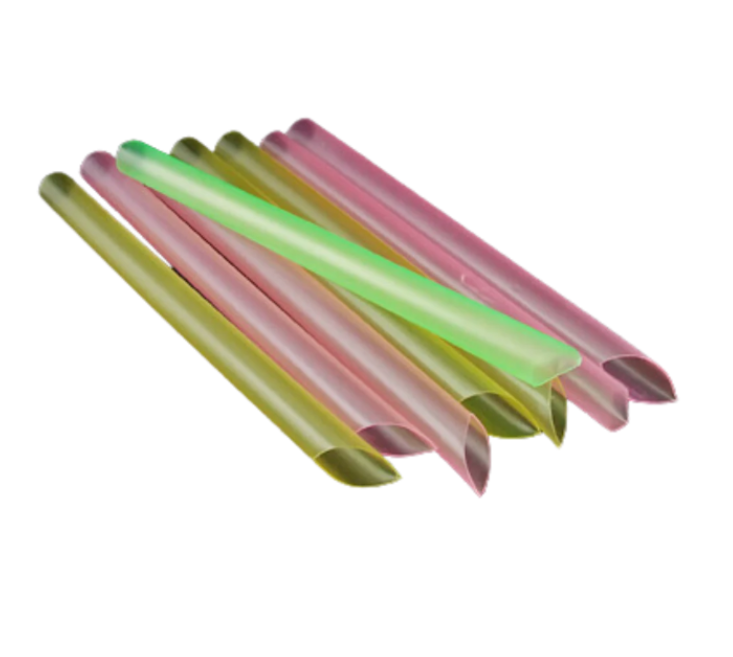
Paper vs. agave vs. reusable straws
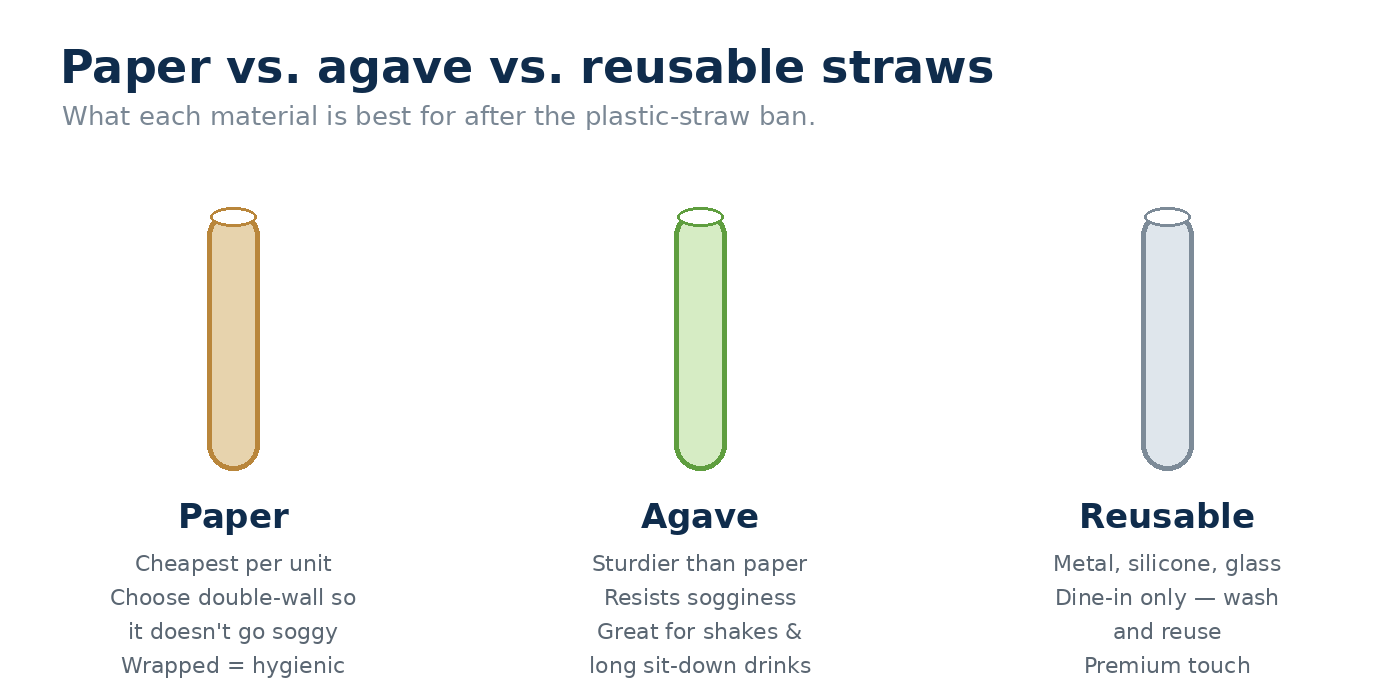
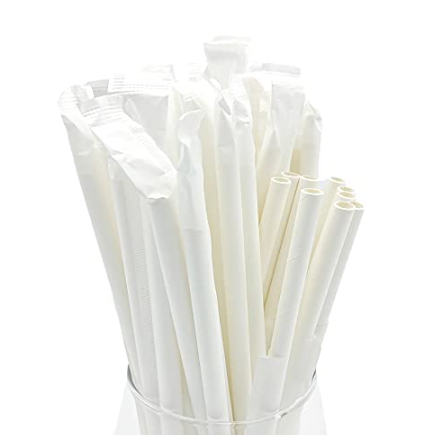
Paper is the default replacement and the cheapest per unit. The thing to watch is wall thickness. Single-wall paper straws get soft fast and are a poor match for slow drinkers or thick drinks; double- and triple-wall straws cost a little more but hold up far longer in the cup. Individually wrapped paper straws also read as more hygienic to customers, which matters for takeout.
Agave straws, made from agave-plant fibre, are sturdier than paper and resist going soggy, so they suit milkshakes and long sit-down drinks. They cost more than paper but less than reusables per serving.
Reusable metal, silicone and glass straws only make sense for dine-in, where you can collect, wash and reuse them. They are a nice touch for a sit-down cafe but a non-starter for grab-and-go. Most operators land on wrapped double-wall paper for everyday service and keep a wider option for shakes and boba. You can compare wholesale paper and agave straws to match wall thickness and diameter to your drink menu.
How many restaurant straws should you order?
A rough starting point: one straw for roughly every cold drink you sell, plus a cushion for the ones that get dropped, doubled up or handed out with takeout. Track a couple of weeks of cold-cup sales and you will have a real number instead of a guess. The same par-level thinking that works for cups and lids works here.
Buying in case quantities almost always beats grabbing retail boxes, and it is where a wholesale supplier earns its keep. Fulji Trading stocks paper, agave and boba straws by the case for restaurants, cafes and caterers, and the same rules that reshaped restaurant cutlery apply to straws, so it pays to buy from a supplier who already sells compliant lines. If you are nearby, you can also pick up straws and the rest of your disposables at our Moncton cash-and-carry and skip the shipping wait.