
Order kraft takeout containers from a wholesaler and the list reads like a lottery draw: #1, #8, #2, #3, #4. No ounces, no inches — just numbers, and they do not even run in size order. Kraft takeout container sizes catch out new buyers constantly, and picking the wrong one is an expensive mistake when it lands 200 to a case.
Here is what each number actually means, what fits inside, and how to settle on the two or three sizes that will cover most of your menu.
What the numbers on a kraft takeout container mean
The numbering is a supplier convention, not a legal standard. It came out of the "fold-to-go" style box — poly-lined kraft board with a four-way tab-lock top that folds shut without a separate lid — and most manufacturers now build to the same five moulds, so a #3 from one brand will sit on the shelf beside a #3 from another.
Two things the number does not tell you: capacity and footprint. Those you have to look up. And because the convention is informal, a handful of brands run a size or two off the common set, so always confirm the ounces and the inches on the spec sheet before you commit to a pallet.
Kraft takeout container sizes at a glance
Here are the five common sizes drawn to scale, so you can see how they actually compare rather than guessing from a number.
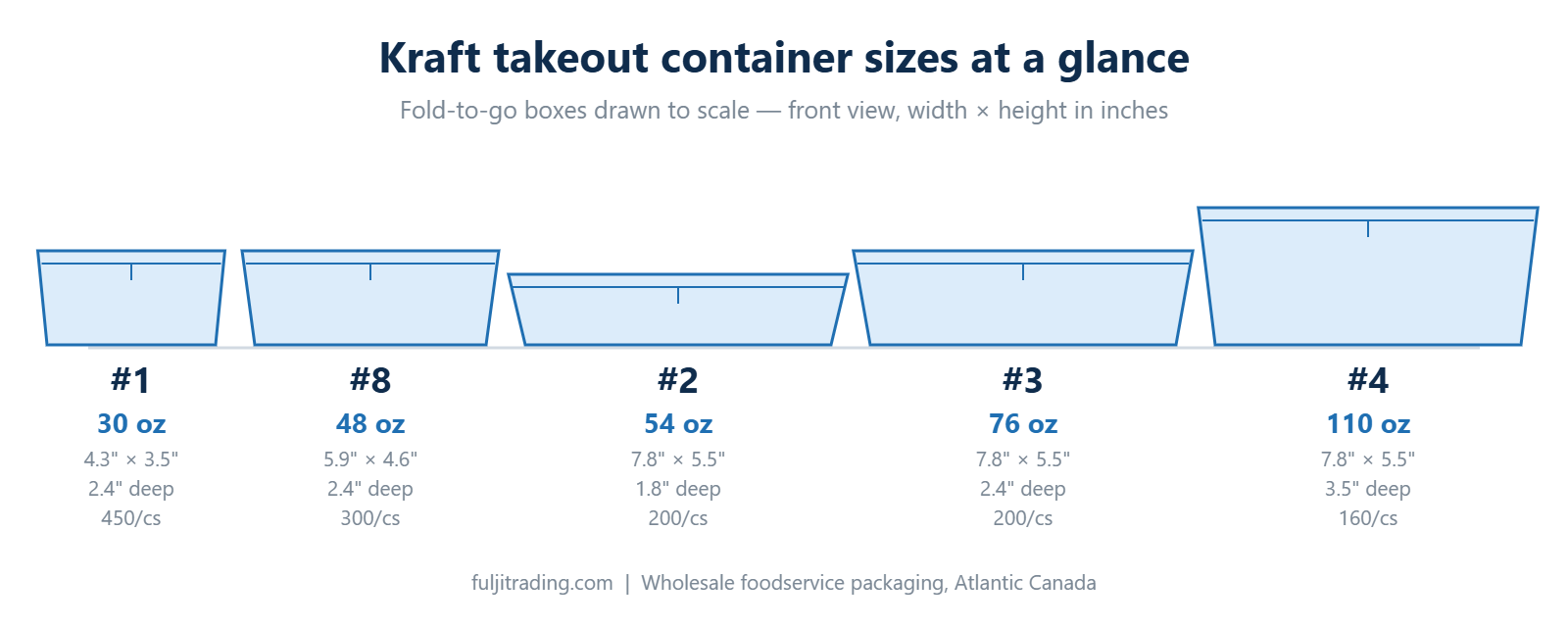
| Size | Capacity | Footprint | Depth | Case | Best for |
|---|---|---|---|---|---|
| #1 | 30 oz | 4.3" x 3.5" | 2.4" | 450 | Sides and rice |
| #8 | 48 oz | 5.9" x 4.6" | 2.4" | 300 | Single mains |
| #2 | 54 oz | 7.8" x 5.5" | 1.8" | 200 | Wide, shallow mains |
| #3 | 76 oz | 7.8" x 5.5" | 2.4" | 200 | Combo plates |
| #4 | 110 oz | 7.8" x 5.5" | 3.5" | 160 | Family and catering |
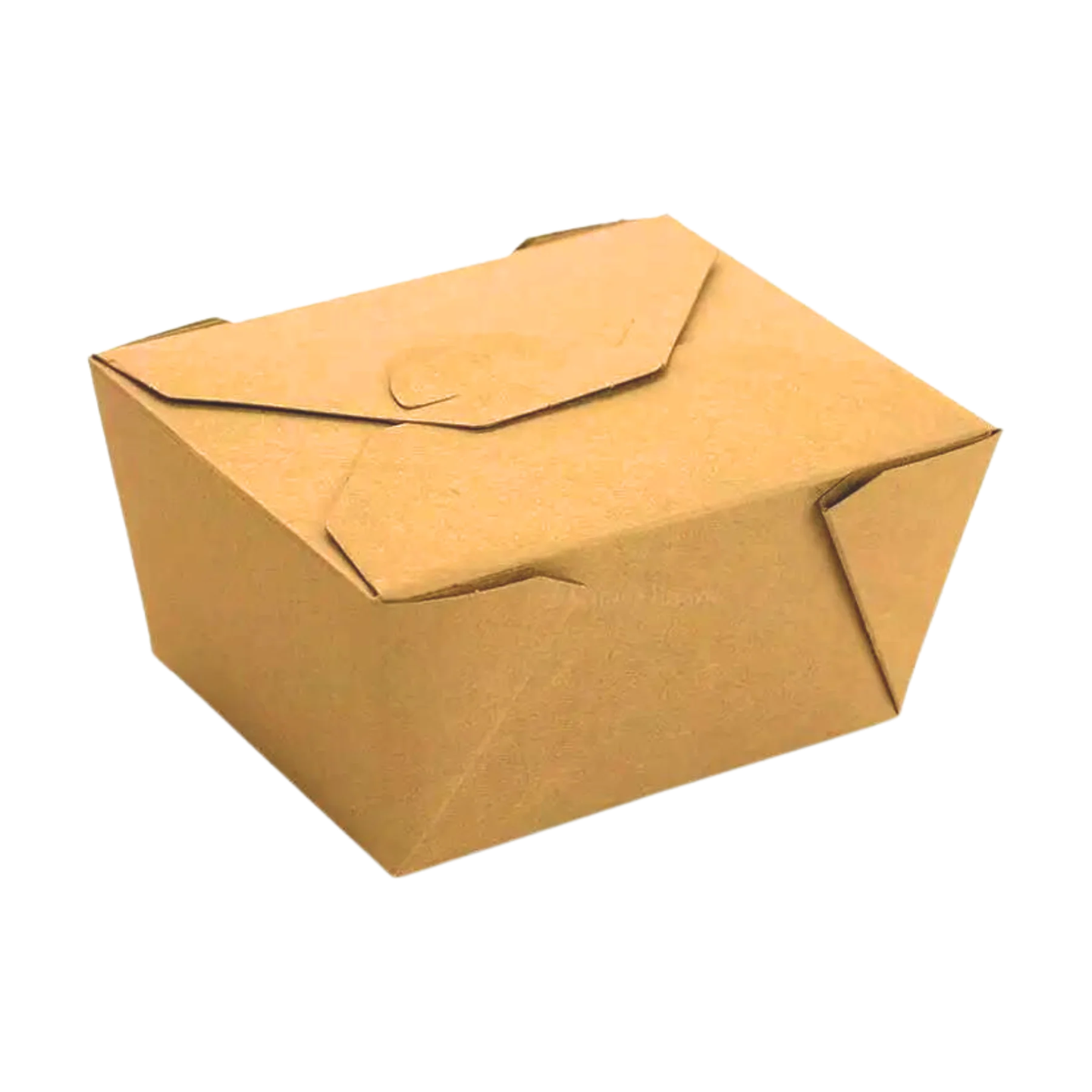
Why is a #8 bigger than a #1?
Because the numbers are model codes, not a size ranking. A #8 holds 48 oz; a #1 holds 30 oz. The #1 through #4 were the original run, sized small to large, and the #8 was added later to fill the obvious gap between the compact #1 and the much wider #2. It kept the next free number rather than getting slotted in as a "#1.5".
So read the number as "which box", not "how big". If you sort the five by capacity you get #1, #8, #2, #3, #4 — which is exactly the order most kitchens end up using them in.
Same footprint, different depth: the #2, #3 and #4
This is the part that saves you money. The #2, #3 and #4 all sit on the same 7.8" x 5.5" base. Only the wall height changes.
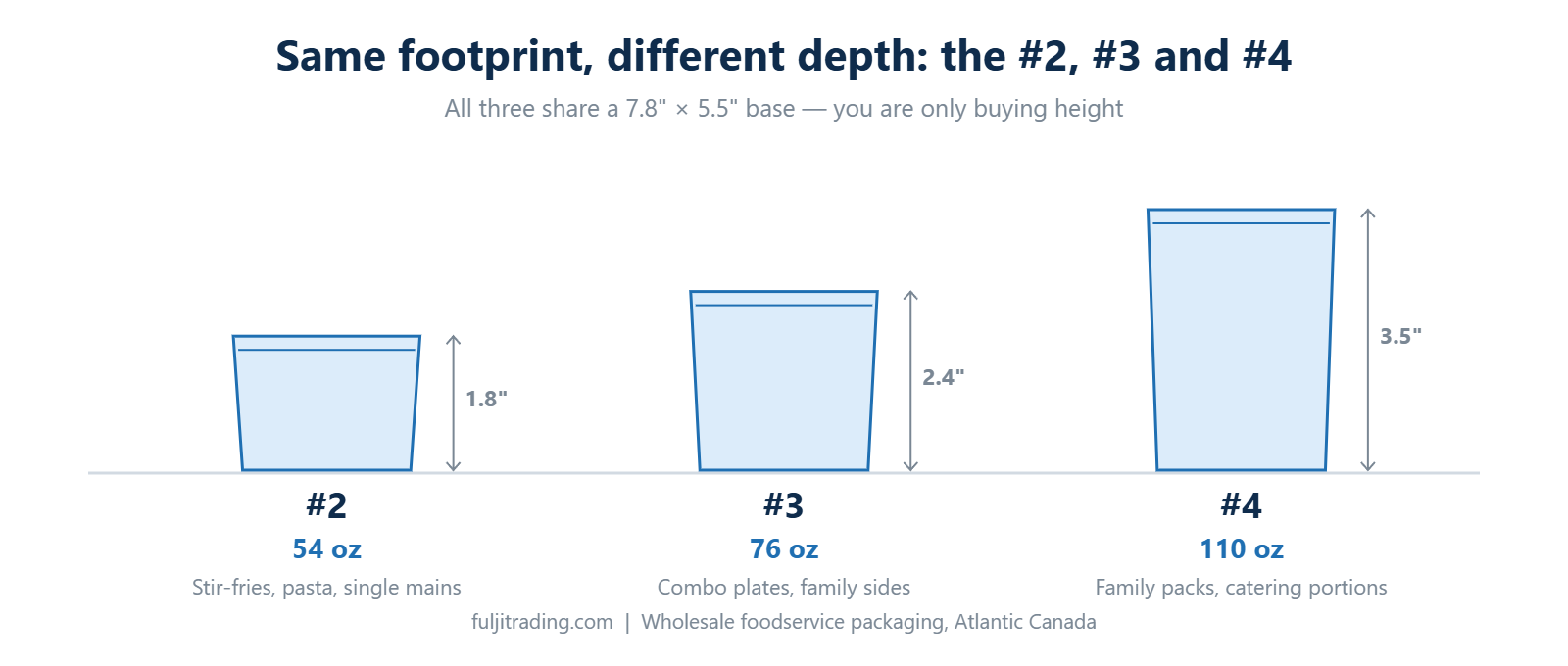
Practically, that means one bag size covers all three, they stack in the same shelf slot, and a delivery driver can stage them together without a game of Tetris. If you already run #3s and need a bigger option for family orders, the #4 drops straight into the same workflow. Sizing your carry-out bags around that shared footprint is worth ten minutes — our guide to takeout bag sizes walks through how to match bag to box.
Which kraft takeout container size should you stock?
Most kitchens do not need all five. Two sizes will carry 80% of a typical menu, and a third covers the outliers.
- #1 (30 oz) — the workhorse side box. Rice, fries, slaw, a kid's portion, a dessert. At 450 to a case it is also the cheapest per box, which matters when it goes out with almost every order.
- #8 (48 oz) — the single-serve main. Rice bowls, salads, a curry with rice, poke. Deep enough that a full portion does not press against the lid.
- #2 (54 oz) — wide and shallow, so food arrives looking plated rather than piled. Best for pasta, stir-fries and anything you would rather the customer saw spread out.
- #3 (76 oz) — the combo plate. Main, starch and a vegetable without them fighting for room.
- #4 (110 oz) — family packs and catering trays of sides. Overkill for a single portion; ideal for a shared order.
One caution on the #2: shallow boxes and saucy dishes do not mix well in a delivery bag. If a dish runs wet, go a size deeper. And if you are trying to keep components apart rather than just contained, a divided box does the job better — see our guide to compartment takeout containers.
How many should you order?
Case counts drop as the boxes get bigger — 450 for a #1, 300 for a #8, 200 for a #2 or #3, 160 for a #4 — so comparing case prices tells you almost nothing. Divide by the count and compare cost per box. A case of #4s can look expensive next to a case of #1s and still be the cheaper choice for the order it is going out with.
Watch storage too. Fold-to-go boxes ship flat and nest tightly, so a case takes up far less shelf than the same number of rigid plastic containers, but a #4 case is bulkier than its 160-count suggests. If you are guessing at reorder quantities rather than working from numbers, our post on calculating par levels for disposables gives you a formula that takes about fifteen minutes to set up.
Do kraft boxes hold up? Heat, grease and the microwave
The kraft board is poly-lined on the inside, which is what makes it grease-resistant and leak-resistant. Manufacturers of this style generally rate them microwave-safe, so a customer can reheat leftovers in the box — a real advantage over foil. The tab-lock top means no separate lid to stock, order or run out of.
Where they struggle is thin liquid. A kraft box is not a soup container; anything you would pour rather than spoon belongs in a lidded paper soup cup. And for anything held hot on a line for hours, foil still wins.
On regulations: Canada's single-use plastics rules target specific plastic items, not paper-based takeout boxes, so a poly-lined kraft container is not caught by them. If you are still working out what you can and cannot buy, we covered it in Canada's single-use plastics rules.
Beyond the fold-to-go box: the rest of the kraft range
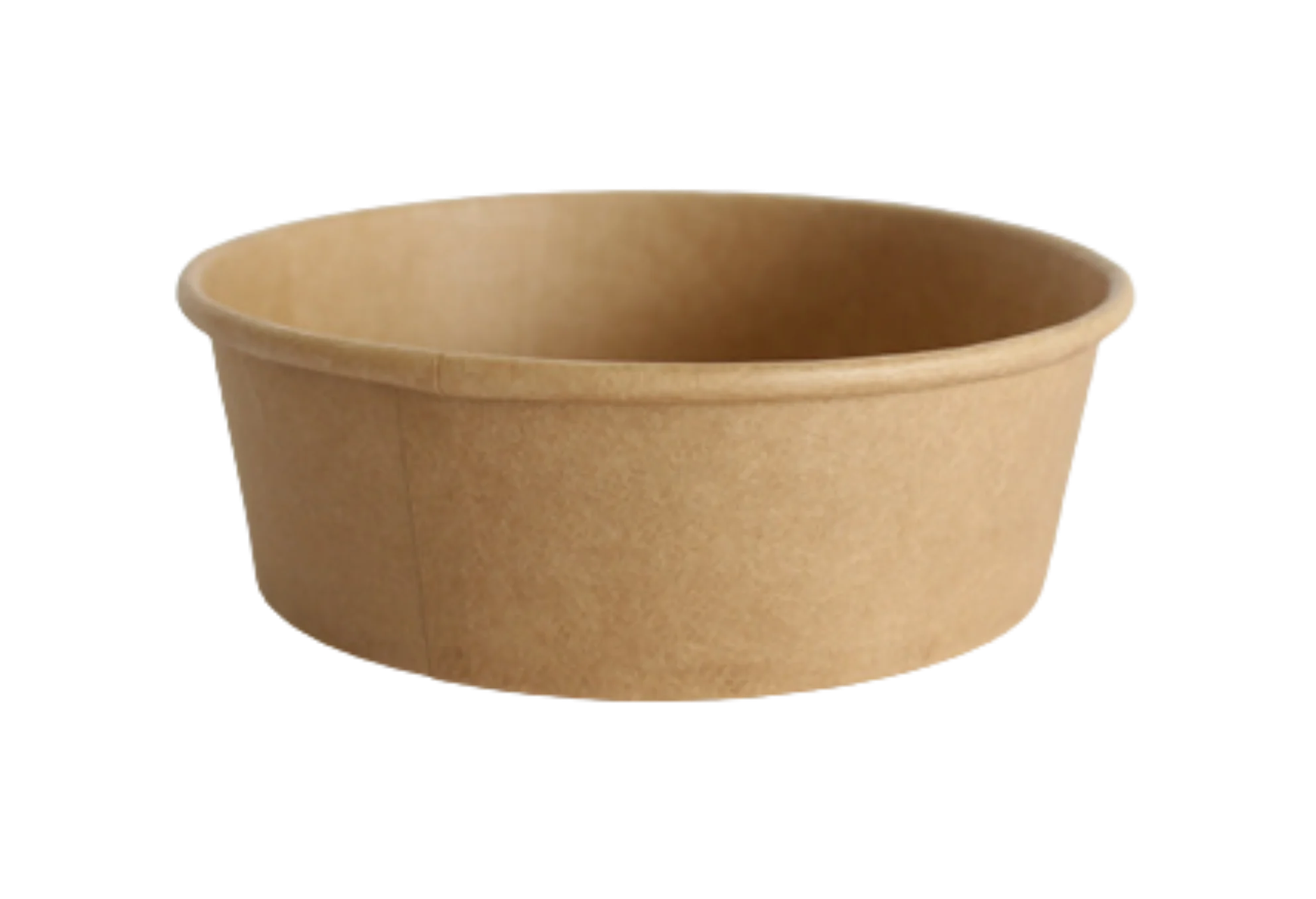
Fold-to-go boxes are one part of a wider kraft range that also covers deli containers, soup cups and salad bowls. If your menu leans toward bowls rather than boxes, a kraft salad bowl with a clear PET lid shows the food off better than a closed box does.
Buying kraft takeout containers in Atlantic Canada
We stock the full run of kraft takeout containers — #1 through #4 plus the #8 — in wholesale case quantities, alongside the deli containers, bowls and lids that go with them. If you want to handle the boxes before committing to a pallet, the cash-and-carry counter in Moncton at 61 Halifax Street has them on the floor, and we deliver across New Brunswick, Nova Scotia, PEI and Newfoundland.
Not sure which sizes fit your menu? That is a five-minute conversation, and it is worth having before you commit to a season's worth of stock. Our restaurant packaging range is built around the sizes Atlantic Canada kitchens actually reorder.