
Ask three pizzerias what size box they need and you will get three different answers. Box sizing sounds trivial until a 16-inch pie arrives at a customer's door folded at the edges, or you realise you have been paying for boxes two inches bigger than your pizzas for a year. Here is a plain-English guide to getting it right.
Pizza box sizes and what they actually fit
Pizza boxes are named for the pizza they hold, not for the carton itself. A 16-inch box measures roughly 16 inches across the inside, so the pie drops in with a little room to spare. Order by the pizza size you sell, not by the numbers printed on the bundle.
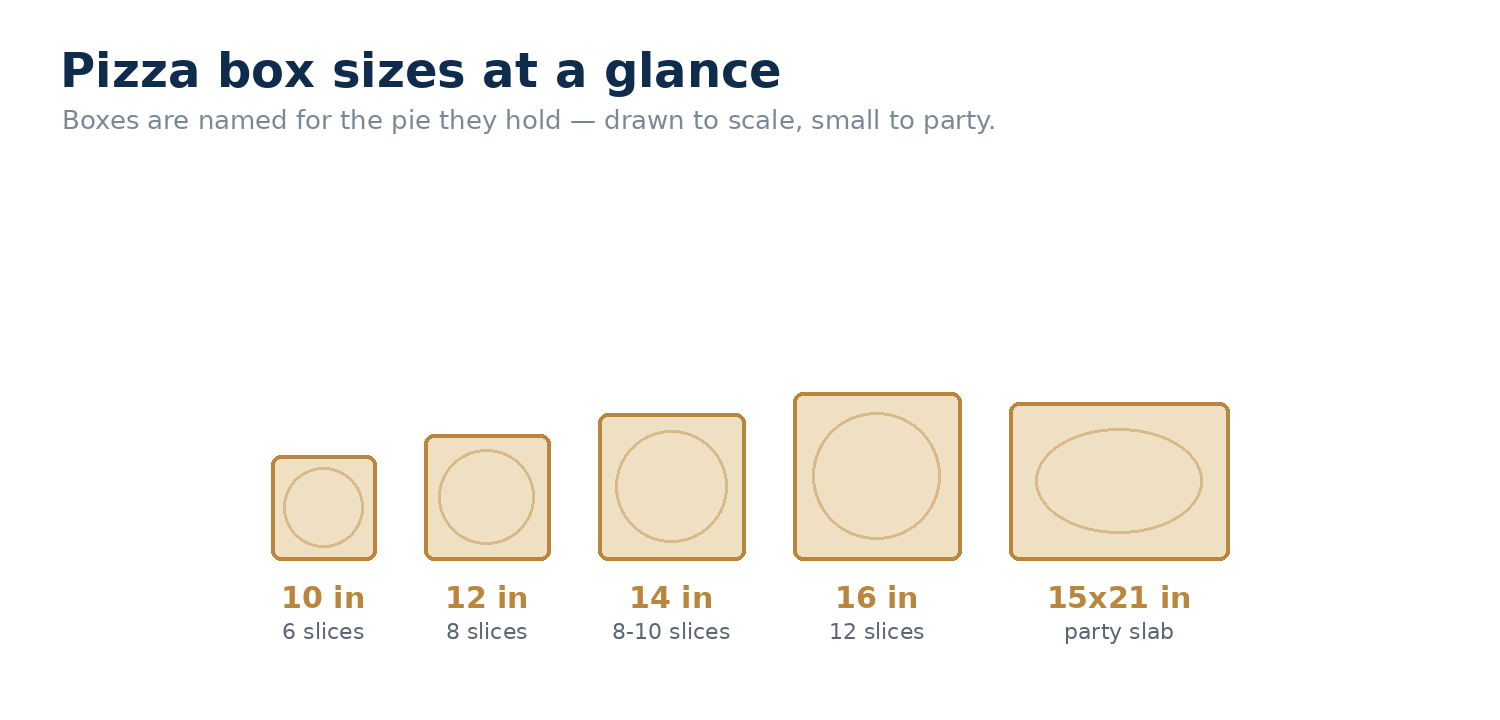
10 inch: personal and small pies, usually cut into six slices.
12 inch: the standard medium, typically eight slices.
14 inch: the workhorse large, eight to ten slices.
16 inch: extra large, most shops cut twelve slices.
15 x 21 inch party box: the slab size for catering, staff lunches and game nights.
| Box size | Typical slices | Best for |
|---|---|---|
| 10 in | ~6 slices | Personal & small pies |
| 12 in | 8 slices | The standard medium |
| 14 in | 8-10 slices | The workhorse large |
| 16 in | 12 slices | Extra large / sharing |
| 15 x 21 in party | slab, hand-cut | Catering & staff lunches |
How many slices are in a 16-inch pizza?
Most shops cut a 16-inch pie into twelve slices. There is no rule about it, and plenty of pizzerias go with eight big slices or sixteen smaller ones for parties. For ordering purposes it makes no difference: how you cut the pizza does not change its footprint, so a 16-inch pizza still needs a 16-inch box.
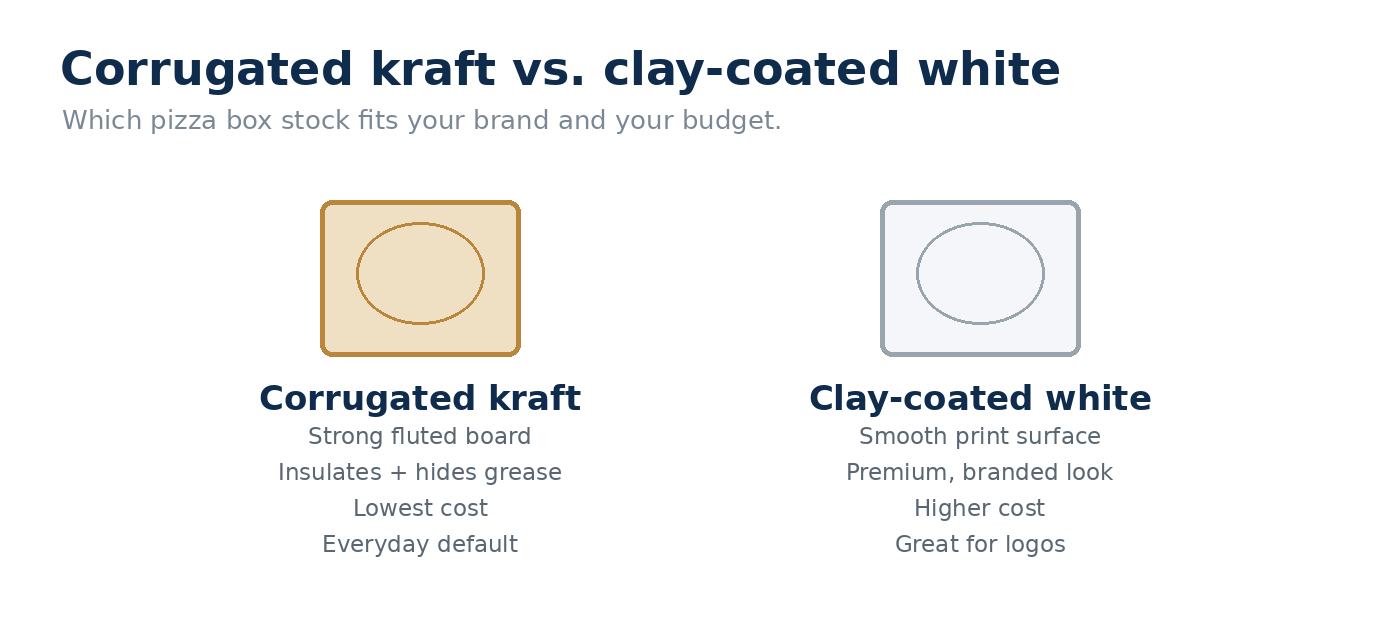
Corrugated kraft or clay-coated white?
Corrugated kraft is the default for a reason. The fluted middle layer traps air, which keeps the pizza hot, and the unbleached surface handles grease without falling apart. Clay-coated white boxes cost a little more but give you a smooth, bright surface that takes print well, which matters if your box is doing marketing work on someone's kitchen table. Many shops run kraft for everyday delivery and keep a white printed box for their signature pies.
Why pizza arrives soggy, and how to stop it
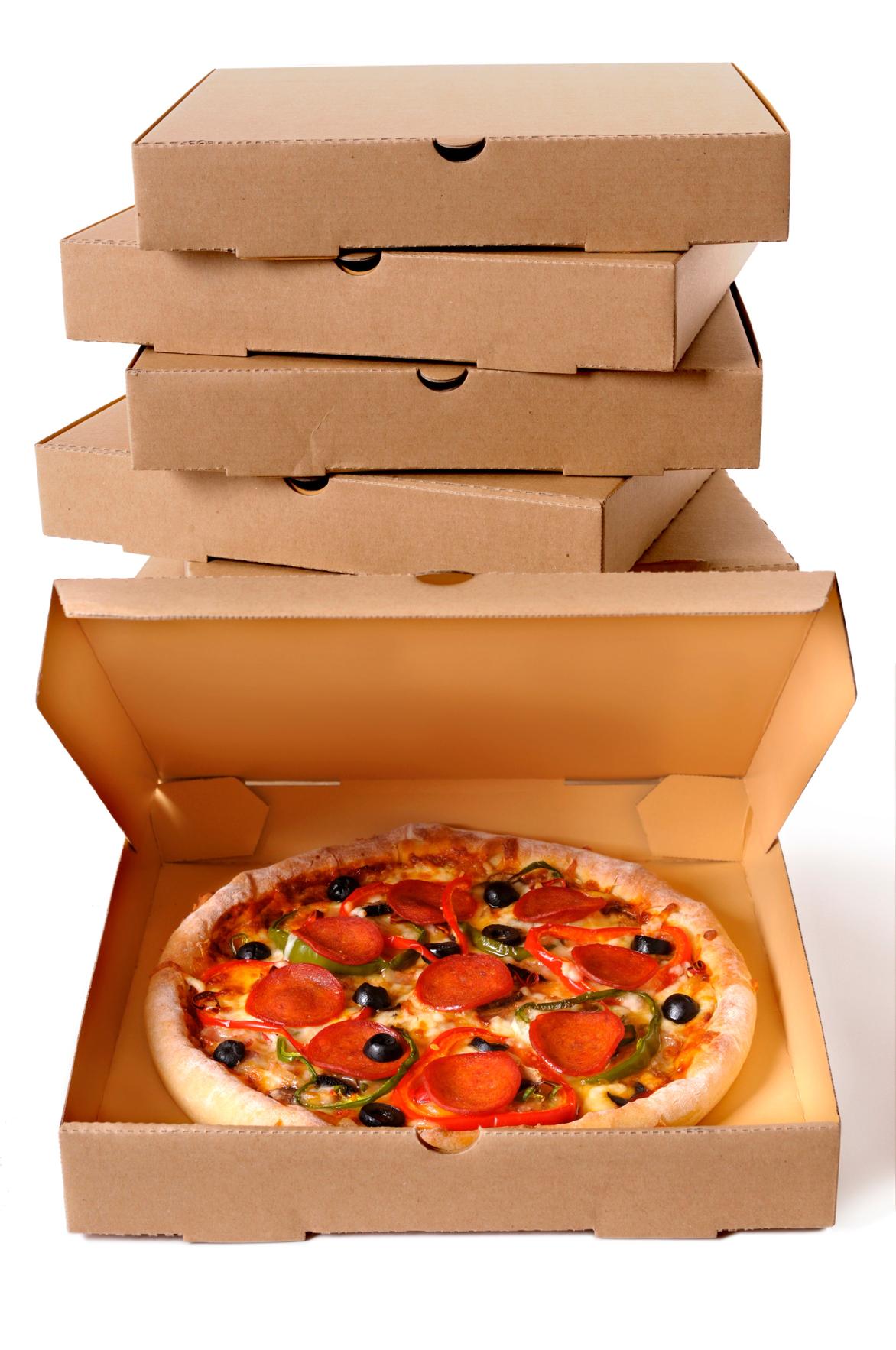
Sogginess is a steam problem, not a grease problem. A hot pizza gives off moisture, and if that steam cannot escape it condenses on the lid and drips straight back onto the crust. Vented boxes give it somewhere to go. Keep delivery stacks short so the weight does not crush the lid onto the cheese, and do not let boxes sit closed on a hot line longer than they have to. A ten-minute wait on the pass will undo a good crust faster than a twenty-minute drive.
Do not forget the by-the-slice kit
If you sell slices, a full box is expensive packaging for one wedge. Slice trays and slice bags cost a fraction of a box, stack neatly by the till and travel better for someone eating on the move. Shops running a lunch slice counter usually find this is the cheapest line item they were not tracking.

Buying boxes without tying up cash
Pizza boxes are bulky, and storage is usually the real constraint rather than price. Work out how many pies you sell of each size in a normal week, add a buffer for the weekend, and buy to that rhythm rather than filling the back room. Buying locally helps here: a supplier a short drive away means you can restock in days instead of holding a month of stock you have nowhere to put.
Sizing it up for your shop
Most pizzerias in New Brunswick and Nova Scotia end up carrying three box sizes and a slice option, not five. Match the boxes to the pies you actually sell, vent them, keep the stack short, and buy in a rhythm your storage can handle. That is most of the job.
Related reading and where to buy:
Wholesale supplies for restaurants and cafes: https://www.fuljitrading.com/industries/restaurants
Wholesale restaurant supplies in Moncton: https://www.fuljitrading.com/moncton
Wholesale restaurant supplies in Saint John: https://www.fuljitrading.com/saint-john
Browse the full catalogue: https://www.fuljitrading.com/shop
Working out cake packaging too? See our cake box and board sizing guide: https://www.fuljitrading.com/blog/resources-guides-1/what-size-cake-box-do-i-need-a-cake-box-board-sizing-guide-13